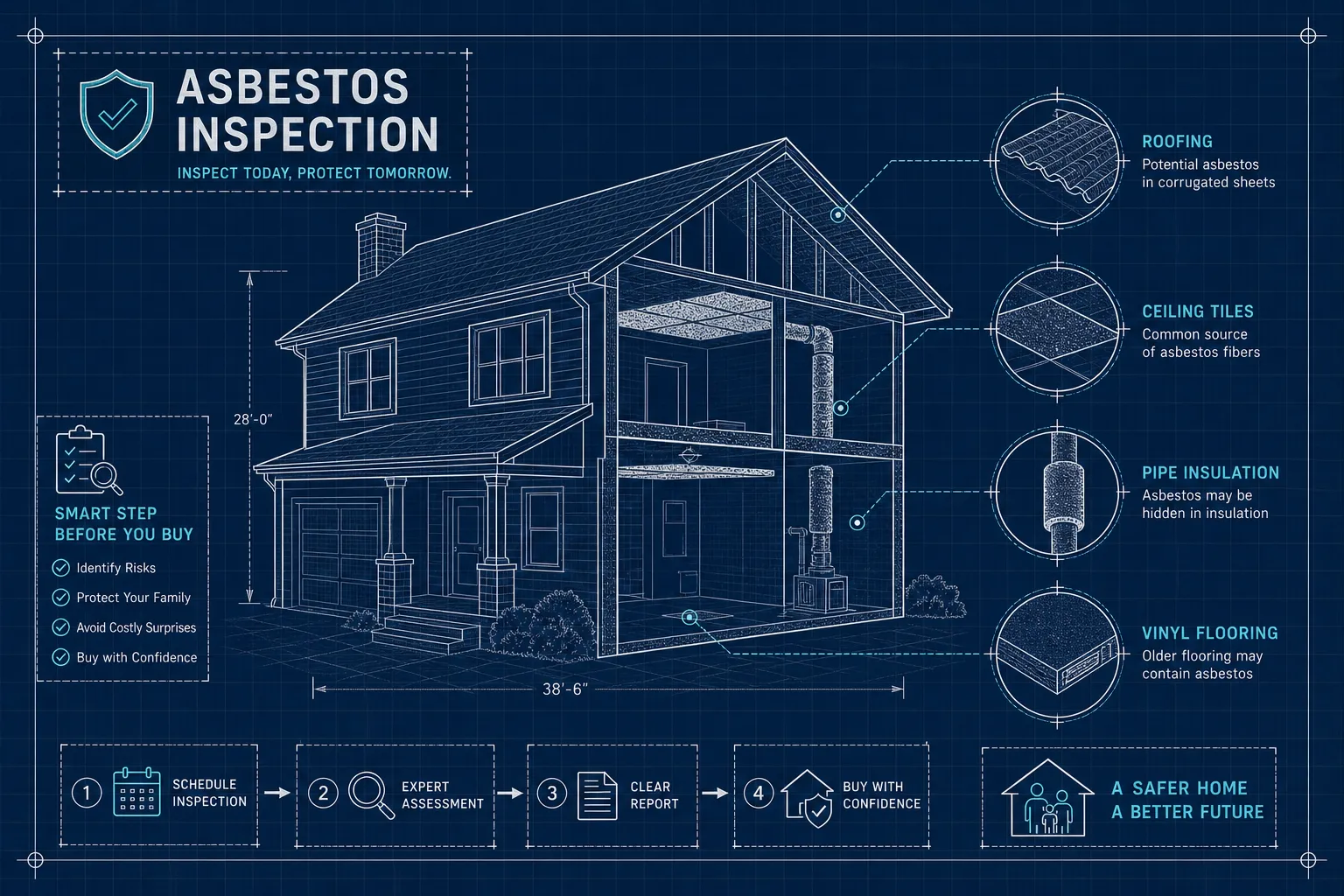

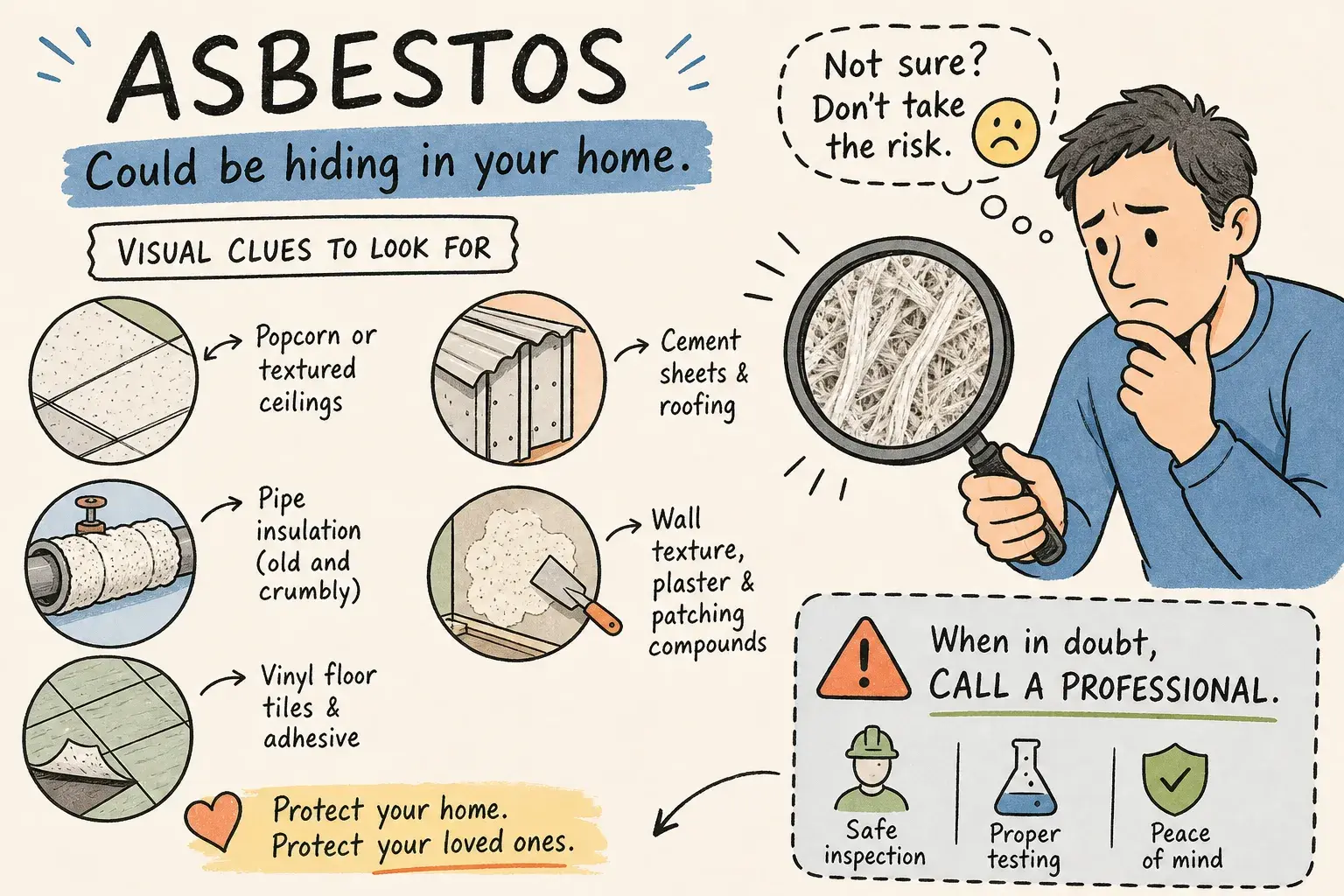
What does asbestos look like? Asbestos-containing materials can look like fibrous white pipe wrap, crumbly gray insulation, bumpy popcorn ceiling texture, or old 9-by-9-inch floor tiles with a dark adhesive layer beneath them. Those are the visual clues.
But not one of those appearances confirms asbestos. That is the hard truth this article is built around. Asbestos fibres are microscopic: far thinner than a human hair, and completely invisible without a microscope.
What your eyes can actually see is the material around the fibres, not the fibres themselves. Visual inspection can tell you a material is suspicious, nothing more. That distinction matters, because scraping, drilling, or sanding a suspect material is exactly how asbestos fibres become a health hazard. This article walks you through what to look for, where to look, why your eyes will always fall short, and what to do once you suspect something in your home.
Key takeaways
-
Sight alone is never enough: Asbestos fibres are microscopic; visual inspection can raise suspicion but cannot confirm the presence or absence of asbestos in any material.
-
Age is your first filter: >Canadian homes built before 1990, especially before 1980, should be treated as potentially containing asbestos-containing materials until tested.
-
Do not disturb: Intact, undisturbed ACMs pose a much lower immediate risk than materials being actively cut, sanded, scraped, or broken apart.
-
No DIY sampling: Attempting to collect a sample yourself can release more fibres than leaving the material alone; professional sampling is the safe approach.
-
Lab analysis confirms: Polarized light microscopy (PLM) performed by an ISO/IEC 17025-accredited laboratory is a widely used standard method for confirming asbestos in bulk building materials, though some samples may require additional testing such as transmission electron microscopy (TEM) depending on the material and regulatory requirements.
-
Call before you renovate: Any renovation or demolition work in a pre-1990 home should follow certified testing, not a visual guess.
What does asbestos look like: common asbestos appearances
Fibrous, powdery, and crumbly: the textures worth noticing
When asbestos-containing materials deteriorate, they tend to share a few recognizable surface traits. Look for a fibrous, slightly fuzzy appearance along broken or frayed edges; a powdery or chalky surface on older insulation that has been bumped or disturbed; and a brittle, crumbly quality in pipe lagging or ceiling coatings that have aged or gotten wet. These are clues, not confirmation. Intact, tightly bound ACMs can look completely smooth and ordinary with no visible texture at all.
The tricky part is that deterioration itself does not tell you what the material is. A crumbling pipe sleeve could be asbestos-containing insulation or it could be plain plaster wrap from a renovation in the 1970s. The appearance of "strands" or "fuzz" is a reason to stop and leave the area, not a reason to conclude you know what you are dealing with.
Chrysotile, amosite, and crocidolite: do the fibre types look different?
In their raw, unprocessed form, the three most common asbestos types do look different from each other. >Chrysotile (white asbestos) has curly, silky, cotton-like fibres that are usually white or pale gray. Amosite (brown asbestos) has longer, coarser, rod-like fibres that are typically ash-gray to brownish. Crocidolite (blue asbestos) has thin, needle-like fibres that range from blue-gray to dark gray. Once any of these are bound into a finished product, though, the distinction becomes irrelevant to your naked eye.
| Type | Raw fibre appearance | Appearance in finished building products |
|---|---|---|
| Chrysotile (white asbestos) | Curly, flexible, silky; white, pale gray, or pale greenish; can look cotton- or gauze-like in bundles | Fibres disappear into the surrounding material; cement sheets look like ordinary gray cement; vinyl tiles take on their manufactured pattern and colour |
| Amosite (brown asbestos) | Straight, stiff, coarse, rod-like; gray-brown, brown, or tan | In insulation may appear as a fluffy fibrous mass; in board or cement products is concealed within a gray, tan, or painted matrix |
| Crocidolite (blue asbestos) | Very fine, straight, needle-like; blue-gray to dark gray, sometimes greenish | Fibres are not visible in cement, tiles, or coatings; the surface colour reflects the binder, not the asbestos |
A chrysotile-reinforced cement sheet looks like ordinary gray cement. An amosite ceiling tile looks like an ordinary beige ceiling tile. The fibre type becomes meaningless to your eyes the moment it enters a manufactured product. This is exactly why laboratory analysis, not asbestos appearance, is the only reliable answer.
Where in pre-1990 Canadian homes to look
Ceilings, walls, and floors
Canadian homes built before 1990, especially those built before 1980, should be treated as potentially containing asbestos until testing says otherwise. The most visually familiar locations include popcorn or stippled acoustic ceiling coatings, drywall joint compound and patching plaster, and textured wall finishes. These were all common applications for asbestos-containing materials from the 1950s through the 1980s.
Flooring deserves special attention. Older 9-by-9-inch vinyl floor tiles and the dark black or brownish mastic adhesive beneath them are among the most commonly identified ACMs in residential properties. Twelve-inch tiles can also contain asbestos. The tiles themselves look like any other vinyl floor tile: patterned, plain, or speckled. The adhesive beneath them, if you ever pull one up, often appears as a dark, tar-like layer. Both can be hazardous if disturbed.
Heating systems, pipe wrap, and attic insulation
Deteriorated pipe insulation is one of the more visually recognizable suspects: a corrugated paper-like wrap or a plaster-coated sleeve, often white or gray, with frayed seams or crumbling sections where it meets elbows and fittings. Furnace and boiler insulation, duct wrap, and heat seals in older mechanical rooms also fall into this category. If it wraps a pipe or surrounds a heat source in a home built before 1990, treat it as suspect.
Attic insulation adds another layer of concern, particularly vermiculite. Vermiculite has a pebble-like, gray-brown granular appearance that is easy to recognize. It is not automatically asbestos-contaminated, but most >vermiculite insulation found in Canadian attics came from the Libby, Montana mine and should be treated as suspect until tested. Do not enter spaces containing vermiculite insulation or disturb it in any way before getting professional guidance.
Exterior and overlooked interior spots
Asbestos-cement siding, known commercially as Transite, looks smooth, flat, and cement-gray, often painted over. It was widely used on soffits, exterior cladding, and gutters. Inside the home, acoustic ceiling tiles in basement rec rooms, heat shields near fireplaces and wood stoves, vinyl sheet flooring backing, and window caulking are all locations that often get disturbed during renovation without the homeowner realizing the risk. If your renovation plan involves any of these materials in a pre-1990 home, testing comes before tools.
How to identify asbestos: visual clues vs. lab tests
A single respirable asbestos fibre is many times thinner than a human hair. You will never see the fibres that pose the greatest health risk. What you may observe when a material is broken or frayed is a fibrous mass, but that visual alone cannot distinguish asbestos from fiberglass, mineral wool, cellulose, or other common building materials.
Consider how easily these can be confused. Fiberglass batt insulation is fluffy and fibrous. Mineral wool is coarse and wool-like. Modern fiber-cement siding looks identical to asbestos-cement Transite. Non-asbestos textured ceiling coatings look exactly like asbestos popcorn ceilings. Understanding what asbestos looks like does not resolve this problem, the materials around it are simply too similar to other products.
Colour, texture, corrugation, a cement-like surface, and visible strands are all consistent with both asbestos-containing and non-asbestos materials. Even experienced contractors have misidentified these materials on the job. The point is not to alarm you but to be straight with you: asbestos appearance tells you a material might be worth investigating, nothing more. The only way to know is laboratory analysis of a properly collected sample.
What to do right now if you suspect asbestos
Leave it alone. That is the rule. Asbestos fibres become a health hazard when they are released into the air, and that happens through disturbance. Material that is intact and undisturbed poses a much lower immediate risk than material being actively worked on. If the material is already crumbling, frayed, or visibly damaged, the urgency increases. But the answer in both cases is the same: stop, walk away, and keep others out.
While you wait for a professional, take these steps:
-
Close off the area and restrict access, especially for children and pets.
-
Turn off forced-air heating, air conditioning, or mechanical ventilation serving the area, provided doing so does not create another hazard, ask the responding professional for specific guidance if you are unsure.
-
Do not clean up any dust or debris with a household vacuum or by dry sweeping; regular vacuums push fine fibres back into the air.
-
If there is loose debris, leave it in place and mark the area clearly.
-
>Do not attempt to collect a sample yourself to send to a lab; disturbance during amateur sampling can release more fibres than leaving the material undisturbed.
Do not attempt to seal, wet, or repair damaged material unless a qualified professional specifically instructs you. Any action that disturbs the material makes the situation worse, not better.
How certified asbestos testing actually works
What on-site professional sampling looks like
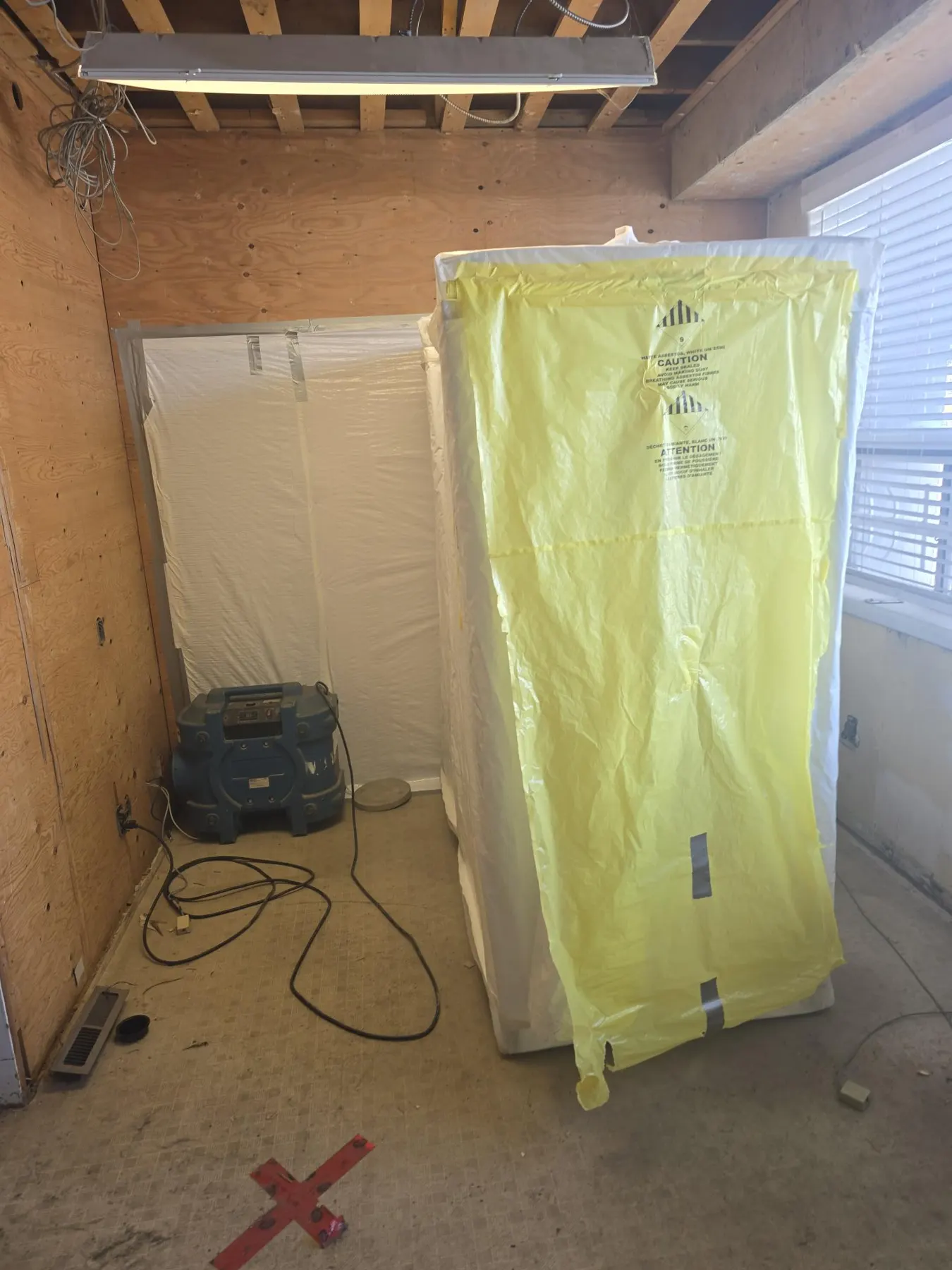
A certified inspector collects a small, controlled sample using proper containment procedures. The area is dampened lightly to suppress fibre release, the sample is taken with minimal disturbance, sealed in an airtight container, and labelled with the location, material type, and collection date. This process requires training, personal protective equipment, and handling procedures that prevent cross-contamination. A qualified professional also determines how many samples are needed to give you a reliable picture of the whole property, since asbestos can be unevenly distributed within a single material.
Accredited lab analysis: what it tells you
Bulk asbestos samples are typically analyzed using >polarized light microscopy (PLM), a standard method for this type of work. Samples go to an ISO/IEC 17025-accredited laboratory; in Canada, CALA accreditation is a major indicator of a qualified lab. PLM identifies whether asbestos is present, what type, and at what concentration. In some cases, particularly with very fine fibres, vermiculite, or low-concentration samples, transmission electron microscopy (TEM) or additional testing may be required to meet regulatory needs. A clear lab report is what allows informed decisions about remediation, encapsulation, or safe renovation planning.
Getting certified testing and remediation in Red Deer and Central Alberta
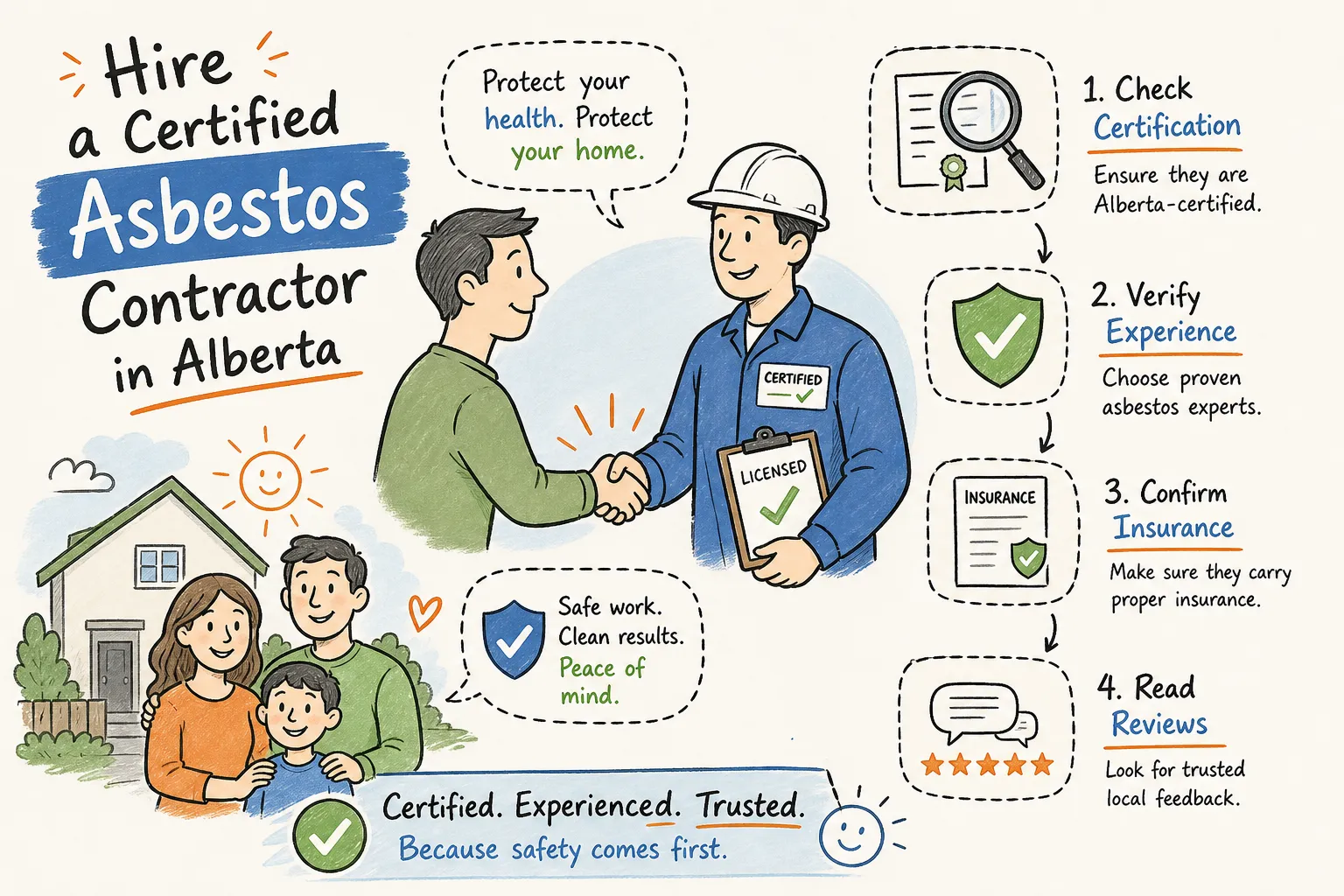
Our team at Rawk J Services Ltd. offers certified on-site sampling and full remediation services for homeowners and commercial property owners across Red Deer and Central Alberta. We handle everything from initial testing to complete removal, following strict containment protocols. We offer free estimates, including for emergencies, and are available around the clock. If you have spotted a suspicious material in an older home and are not sure what to do next, reach out before any work begins.
The bottom line on identifying asbestos
What does asbestos look like? It can look like a lot of things: fibrous pipe wrap, crumbly ceiling texture, old floor tiles, gray granular insulation in your attic. But looking at it will never tell you whether it is asbestos. That is not a limitation of your attention; it is a physical fact. The fibres that matter are microscopic, and the materials that contain them are deliberately designed to look like ordinary building products.
The smart move is simple. If your home was built before 1990 and you are planning any work that could disturb existing materials, get testing done first. Don't guess. Don't disturb. Don't sample it yourself. Get in touch with our team at Rawk J Services Ltd. before you start any work.
Frequently Asked Questions
Can we safely live in a home with suspected asbestos present? Yes, you can often remain in a home if the suspected asbestos-containing material is intact and undisturbed because intact ACMs pose a much lower immediate risk. We advise you to keep the area undisturbed, restrict access, and follow the other precautions listed until a professional assesses the situation. How urgent is it if the material is crumbling or frayed? It is more urgent when material is crumbling or frayed because disturbed material is more likely to release asbestos fibres into the air. We tell you to stop any activity, keep others away, turn off forced-air systems if safe to do so, and contact a certified professional rather than attempting cleanup or sampling yourself. Is a visual inspection during renovation good enough to decide whether to test or remove material? No, a visual inspection is not sufficient because asbestos fibres are microscopic and visual clues can only raise suspicion, not confirm presence or absence. We recommend certified testing before any renovation or demolition work in pre-1990 homes rather than relying on a visual guess. Who should perform sampling and removal in Red Deer and Central Alberta? We can perform certified on-site sampling and full remediation services for homeowners and commercial property owners across Red Deer and Central Alberta. We provide testing through to complete removal, follow strict containment protocols, offer free estimates including for emergencies, and are available around the clock. What laboratory accreditation should we look for when getting samples analyzed? Look for analysis performed at an ISO/IEC 17025-accredited laboratory, with CALA accreditation being a major indicator in Canada. We note that PLM is a typical method for bulk samples and that some samples may require additional testing such as TEM depending on the material and regulatory needs.
Need help with this in Central Alberta?
Rawk J Services offers asbestos testing & removal in Red Deer and area, with free estimates and 24/7 response.